Thursday, September 20, 2007

The Divine Perhaps

“The sentence, the dread sentence of death, was the last of distinct accentuation which reached my ears.” This is all we hear of the justice passed upon the nameless narrator of Edgar Allen Poe’s short story “The Pit and the Pendulum.” In Poe’s universe, punishment need not accompany a crime—the accused begins guilty, and his entire literary life is occupied with the realization of his sentence. Justice is anonymous, disembodied; there is no trial, only the sentence, announced by a fever-dream of faceless judges. The narrator sees their white lips “fashion the syllables of my name,” and he shudders, “because no sound succeeded.”

Last night, I watched Jan Svankmajer’s 1983 short film “The Pendulum, the Pit, and the Hope.” With no narration or dialogue, the Czech director's film takes the short story’s disembodying of justice one step further; we catch only a glimpse of darkened, robed figures leading down dank corridors before we see ourselves, through the gaze of the victim, tied down beneath the pendulum. The entire film is viewed as if through the eyes of the victim, so that we never see his face. In Svankmajer's view, justice’s anonymity makes it omnipotent, while the accused’s anonymity makes him universal. Punishment is not quite senseless, but is certainly source-less. Precisely this absence of origin that prevents us from judging justice in the world of the pit and the pendulum—how can we judge that which comes from nowhere and has no explanation? And it is from this absence that justice derives its authority.

Tomorrow is Yom Kippur, the Day of Atonement. According to Jewish tradition, justice moves entirely outside the realm of human law during the High Holy Days. The season’s most emblematic prayer intones:
On Rosh Hashanah it is written, On Yom Kippur it is sealed:
Who shall live and who shall die,
Who shall see ripe age and who shall not,
Who shall be secure and who shall be driven,
Who shall be tranquil and who shall be troubled…

The sentence has been passed without a trial; punishment will be meted out with no warning. Hooded monks and black-robed judges must appeal to the same authority and fear the same unknowable judgment as the common sinner. Justice is disembodied in the most profound sense, as it belongs to no human body.

The Jewish tradition I’m familiar with does not draw a clear line on "decrees of fate," as Poe puts it. Does atonement absolve us from our prescribed punishment, or is atonement merely an effort toward acceptance of that fate? One line from the liturgy offers a possible answer: “For sins against god, the Day of Atonement atones. But for sins against another, the Day of Atonement does not atone until you have appeased your fellow.”

In Poe’s world, escaping judgment is possible, not through moral conduct, but with a strange combination of personal ingenuity and well-timed politics: although his narrator escapes the pendulum on his own, he is only saved from his Spanish dungeon by an invading French army. In Svankmajer’s movie, our hero escapes the pit through a hole in the wall, only to fall into the arms of a shadowy monk, his face darkened beneath his hood. Escape here does not mean deliverance: "What! my child! on the eve, perhaps, of salvation.... you would then leave us?" This is the closing epitaph of the film. They are the final lines of "A Torture by Hope," the short story by Count Villiers de l'Isle Adam, a 19th-century French writer who much admired Poe. In it, a Rabbi, on the eve of his execution by fire at the hands of the Spanish Inquisition, believes he has found a way to escape the dungeon that holds him. A step away from freedom, he is intercepted by the Grand Inquisitor, who is charitably intent on the rabbi accepting God in his final moments before death. In Villiers' story, the most profound torture is that of "the divine 'Perhaps,'"--the tortured hope of escape from judgment, which is always inescapable.

Sunday, September 16, 2007

Aphorism

He who reads with the least understanding copies with the most faith.

What I could hear of the boss' conversation with the phone company


"They've sent someone already. I know what they're going to say. They're going to say there's nothing wrong."
...
"Do those people get things done faster than the normal people?"
...
"Ok, what's the highest crisis level you can put it on?...That is the highest level?"
...
"Well, how can I get in touch with you?...Or anybody?"
...
"Yeah. Or today's winning lotto numbers."

Wednesday, September 12, 2007

The Legacy of the Olive Eaters


One of the most frightening articles I read this summer was a New Yorker piece on the massive fraud in Italy's olive oil industry. Apparently, I may never have tasted real olive oil in my life. Every year, hundreds of thousands of tons of oil from places like North Africa, Spain and Turkey are shipped to Italy and passed off as genuine Italian virgin olive oil. Sometimes the counterfeit oil isn't even from olives, but made from a substitute like canola. All this is done to make 'authenticity' cheaper and more profitable for the distributors. According to the article, fraud is so widespread that true genuineness isn't profitable any more--small farmers who grow actual Italian olives can't sell their produce.

Unfortunately, I was not too surprised to learn that big olive oil companies have no financial investment in the authenticity of their own product. But Leonardo Marseglia, one of the biggest distributors, doesn't even have an aesthetic investment in the genuineness of his oil. The Italian government and the EU feel they have to protect what they see as an essential part of the country's cultural heritage (although there is evidence that olive oil fraud is thousands of years old), and so have whole departments committed to investigating olive oil counterfeit. But Marseglia seems to think that 'authenticity' is itself a fraud: “When someone has two silos of oil, one Italian and the other foreign, you just have to switch them: the other one becomes Italian oil, this one becomes foreign," he told the article's author. If legitimacy can be so easily fabricated, he seems to be saying, why put any stock in it at all?

I read the article during breaks from a temporary messenger job I had at a well-known designer's office in Manhattan's fashion district, a neighborhood where immigrant-run, sweatshop-like fabric factories occupy adjoining floors of the same building as studios selling multi-thousand dollar items. It's the only industry I know where the people at the top walk across the street to do face-to-face business with the people at the bottom. Despite my surroundings, the olive oil expose put me in mind of a trip to Italy I took last spring. In both Florence and Rome I heard some extremely good gypsy street musicians (and some very bad ones). The groups always had one melody instrument--usually a violin or saxophone--and at least one accompanying instrument--usually a guitar or acoustic bass. The bassists always used only three strings, always made of brightly colored nylon strings which they would snap percussively. Performances consisted of various songs strung together into seamless medleys, with no tempo change or pause between melodies--only a chorus or two of each song would be played before moving to the next. But there were a few tunes that came up in idiosyncratic renditions again and again. The two I heard most often were the theme from The Godfather and "I Did it My Way."

These tunes aren't even Italian, let alone traditional folk music. However, they may be obvious choices for the street ensembles, who count on exploiting the picturesque notion of Italy that American tourists devour in stateside movies and television. But at the same time, the gypsy musicians' repertoire strikes me as odd. It romanticizes the notion of a self-styled, gangster-aristocrat Mafioso--the kind of person who left Italy to escape things like gypsy buskers, and who probably would be the first to spit at someone sawing away at a cheap violin next to their restaurant table.

Sunday, August 5, 2007

Vans

-Originally posted April 15, 2007

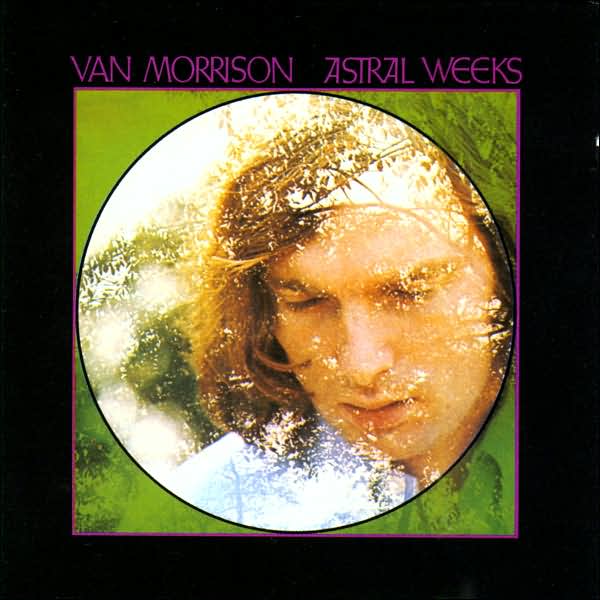
Today I was about to step out into the rain when I heard a song coming from someone's apartment: "...now here comes the man--and he says the show must go on..." a song I liked very much but hadn't heard for awhile. It was "Ballerina" by Van Morrison, from the album Astral Weeks, which to me always sounds like a lush, green spring. Maybe it's the album cover...

I never thought about it before, but Van Morrison is a writer who often brings a lot of divergent ideas into one song. Somehow he's able to put an unexpected collection of people and places together and connect them all to a certain setting and mood. For those of you who haven't listened to much of his music, try to forget "Moondance" and oldies stations for a moment and consider a song like "Will You Meet Me in the Country in the Summertime in England," where he talks about W.B. Yeats, T.S. Eliot and William Blake smoking dope, Mahalia Jackson (a gospel singer), Jesus, Avalon (mythic resting place of King Arthur), and the Church of St. John (someplace in England?), and they're all there, in the country in the summertime in England. Or there's "St. Dominic's Preview," where he mentions Edith Piaf's soul, Belfast, Buffalo, San Francisco, and the Notre Dame cathedral.

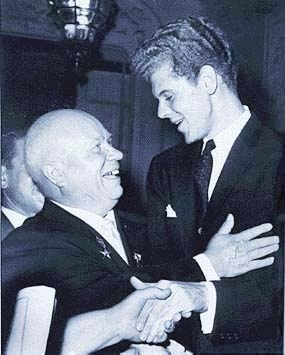
Van Morrison (born George Ivan Morrison) also brings together two musical divergences with his name: Jim Morrison, the singer for The Doors, and Van Cliburn, a famous classical pianist. Most people today know Jim Morrison, but few know Van Cliburn, though at one point his was a household name. In 1958 he won the first International Tchaikovsky Piano Competition, put on by the Soviet Union to demonstrate Soviet superiority. Apparently, the contest's judges had to ask Premier Kruschev for permission to give the prize to an American, and Time magazine called Cliburn "The Texan who conquered Russian." His full name is Harvey Lavan Cliburn.


Wine and Talmud

-Originally posted Sunday, April 8, 2007

So, as was already pointed out, it's Passover. (It lasts seven days.) At the seder (Passover dinner) I went to on Monday, we had the typical Manischewitz (really sweet) wine, but also a "semi-sweet" (it wasn't really) brand of wine called "Rashi." I thought this was a little strange, considering the fact that Rashi is mostly remembered as the most respected commentator on the Torah and the Talmud. He lived from 1040 to 1105, mostly in Troyes, France. His real name was Shlomo--the name by which he is remembered is an acronym of Rabbi Shlomo Yitzchaki (Rabbi Solomon son of Isaac). Rashi is one of those people who, being important enough in Jewish tradition and having lived long enough ago, has several legends attached to his name. The only one I know is about his birth: His parents wanted a child but could not have one. His father was very poor, but one day found a precious jewel. He took it to the jeweler, but it was worth too much for the jeweler to afford. The emperor (or king, or bishop, or whatever) heard about the stone and sent a messenger to Rashi's father to say he wanted to buy it to put on the head of his idol (or on his cross, or whatever). During the journey by boat to see the emperor, there was a great storm and Rashi's father pretended to lose the stone in the sea. When he returned home, a man was at his house and told him that he would be rewarded for not giving the jewel to an idol worshipper. Soon his wife had a son, and they named him Solomon.

Kind of a nice story, but it still doesn't explain why he would have a wine named after him. I looked at the "Rashi" label website, which says Rashi is remembered for his scholarship "as well as for his extraordinary winemaking ability. The pristine vineyards used in the Middle Ages by Rashi have served as models for today's Rashi wine vineyards located in the winemaking heartlands of Italy and New York State." They offer a full line of Kosher wines. Elsewhere I read his father was a winemaker.

But now that I think about it, the Rashi connection is not nearly as ridiculous as some of those that inspired the name of other wines I've had. Some examples: "The Long Paddock" Sauvignon Blanc (Australian agricultural history) or "Big Tattoo" Riesling/Pinot Blanc (tattoo artist-wine importer brother duo commemorate mother's death from cancer).

Arabic Translation

-Originally posted Sunday, March 25, 2007

Today I went to the coffee shop across the street from my apartment. When I got to the register, I put down on the counter the Penguin paperback I had been carrying. The girl behind the register asked me if I was reading it in translation. It was Don Quixote. I said yes, unfortunately I don't read Spanish. She said she didn't either yet but she was getting better. The guy at her bodega was teaching her.
The Spanish word bodegon means pantry, but is also used to refer to still-life paintings (this at least I know). This is because in the Spanish tradition still-lifes often depict objects from the pantry. Like for instance a coffee cup.

In France, they call bodegas arabes, after those who frequently own them.
Cervantes interrupts his narrative in Chapter IX to write that the rest of Don Quixote's history was recorded by "an Arab historian."